
Why the Brands That Grow Fastest Are the Ones the Market Understands Instantly
Most businesses do not have a branding problem.
They have a clarity problem.
They invest in new logos, redesign their websites and refresh visual assets, hoping the market will suddenly respond differently. The design improves, the colours change, and the brand begins to look more modern.
But the underlying issues remain.
- The wrong leads still appear.
- Sales conversations still take too long.
- Prospects still struggle to understand what makes the business different.
The problem is rarely aesthetics.
It is interpretation.
If the market cannot quickly understand what a business does, who it serves and why it matters, growth becomes difficult, no matter how much marketing activity takes place.
Branding exists to solve this problem.
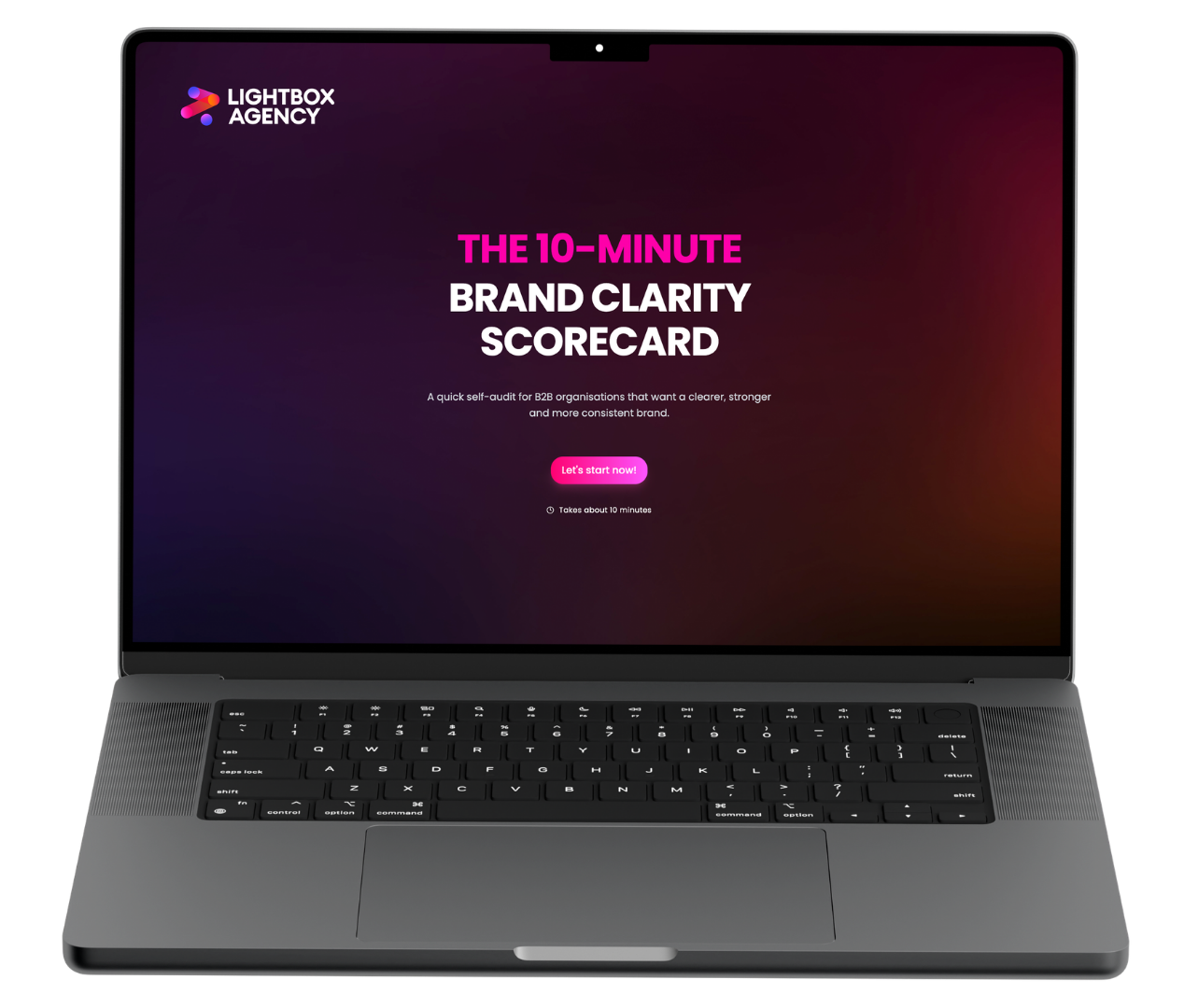
FREE RESOURCE
FREE RESOURCE
Here's what The 10-Minute Brand Clarity Scorecard does to benchmark and strengthen your brand:
 Determines positioning gapsSpots messaging gapsBenchmarks your brand strengthPinpoints high-impact fixes
Gain clarity for more focused, prioritised actions that will make the biggest difference to your brand.
Try It NowAt its core, branding is not decoration. It is a system that makes a business understandable.
When branding works properly, marketing attracts the right audience, sales conversations move faster, and customers recognise the value earlier. When branding is unclear, every department ends up compensating for the confusion.
Growth becomes harder not because the business lacks capability, but because the market cannot interpret it easily.
For growth-driven organisations, branding is not a cosmetic exercise.
It is business infrastructure.
What Branding Actually Means
Branding is often reduced to visual design.
Logos, colours and typography are important elements, but they represent only the surface of something much deeper.
A brand is the set of ideas people associate with a business.
It shapes how customers interpret your expertise, how employees explain your services and how the market compares your organisation with alternatives.
Branding influences how clearly people can answer questions such as:
- What does this company actually do?
- Who is it best suited for?
- Why should someone choose it over another provider?
If those answers are easy to understand, trust forms quickly.
If those answers are vague or inconsistent, the market becomes uncertain.
In crowded industries where attention is limited and alternatives are abundant, clarity is one of the most valuable competitive advantages a business can have.
The companies that grow fastest are rarely the ones with the most advertising.
They are the ones the market understands immediately.
The Five Foundations of Growth-Driven Branding
Strong brands are not created through isolated creative decisions.
They are built through a set of interconnected components that reinforce one another and keep the organisation aligned as it grows.
For growth-driven businesses, branding usually rests on five foundations:
- Brand Strategy
- Brand Positioning
- Brand Identity
- Brand Systems
- Rebranding
Each element plays a different role in shaping how the business is interpreted by the market.
Together, they form the structure that allows a brand to remain clear as the organisation evolves.
Brand Strategy
The Thinking That Prevents Branding From Becoming Guesswork
Every effective brand begins with a strategy.
Without a strategy, branding becomes subjective.
Teams debate colours, taglines and visual styles without first agreeing on what the brand should actually communicate.
Brand strategy removes that uncertainty.
It clarifies the commercial foundations of the brand and defines what the organisation should represent in the minds of its audience.
A strong brand strategy answers several critical questions.
- Who is the organisation best suited to serve?
- What problems does it solve better than alternatives?
- What outcomes matter most to its customers?
- What perspective or methodology makes the company different?
When these ideas are defined clearly, branding decisions become significantly easier.
- Design becomes purposeful.
- Messaging becomes consistent.
- Marketing becomes more focused.
Strategy ensures the brand communicates the right ideas before the design work begins.
Without it, branding becomes decoration rather than direction.
Brand Positioning
The Discipline of Making the Choice Easy
Positioning defines how a business is understood relative to its competitors.
Many organisations describe themselves in language that could apply to almost anyone in their industry. They highlight quality, service and innovation, believing these messages demonstrate strength.
The problem is that nearly every competitor claims the same things.
When businesses sound identical, customers make decisions based on familiarity, convenience or price.
Strong positioning creates contrast - It clarifies who the organisation serves best, which problems it solves most effectively and why its approach is distinct.
Good positioning does not attempt to appeal to everyone - It focuses on becoming clearly relevant to the right audience.
When positioning is strong, several things happen quickly.
- Marketing begins attracting better leads.
- Sales conversations become easier to navigate.
- Prospects recognise the company’s expertise faster.
Positioning does not attempt to sound clever.
Its purpose is much simpler.
It makes the choice obvious.
Brand Identity
Translating Strategy Into Something People Recognise
Once strategy and positioning are clear, identity gives the brand a visible and verbal form.
Brand identity includes the visual elements people typically associate with branding:
- Logos
- Colour systems
- Typography
- Imagery
- Iconography
- Layout structures
But identity also includes the verbal layer of the brand.
- Tone of voice
- Messaging patterns
- Language choices
- The way ideas are explained
A strong identity reinforces the strategy behind it.
A brand positioned around clarity and expertise should not appear visually chaotic. A business positioned around innovation should not present itself with an overly conservative design.
Identity works best when what the brand looks like and what the brand stands for feel aligned.
When this alignment exists, recognition and trust grow quickly.
Branding Is More Than Visual
Modern Brands Are Multi-Sensory Systems
One of the most common misconceptions about branding is that it is primarily visual.
Visual identity is important, but it represents only one layer of a modern brand.
A complete brand is expressed through several channels that shape how people experience and recognise the business.
These typically include:
- Visual branding
- Verbal branding
- Sound branding
- Interaction and behaviour
Together, these elements create a cohesive system that allows a brand to communicate consistently across every touchpoint.
As communication channels expand and digital environments evolve, this broader definition of branding becomes increasingly important.
Visual Branding
How Your Brand Is Recognised Instantly
Visual branding is the layer most people are familiar with.
It includes the elements that allow audiences to recognise a brand quickly and consistently across environments.
Visual branding typically includes:
- Logos
- Colour systems
- Typography
- Imagery
- Iconography
- Layout patterns
When executed well, visual branding creates immediate recognition and reinforces credibility.
However, visual identity alone cannot carry the full meaning of a brand. It must work alongside the verbal and experiential layers that communicate the organisation’s ideas and personality.
Verbal Branding
The Voice of Your Brand
If visual identity determines how your brand looks, verbal branding determines how it speaks.
Verbal branding defines the language patterns, tone of voice and messaging structure that shape how your organisation communicates.
It influences:
- How your website explains your services
- How marketing campaigns frame your value
- How your team describes your expertise in conversations
- How your content educates and persuades audiences
Strong verbal branding ensures every communication sounds consistent regardless of who creates it.
Without it, messaging often becomes fragmented.
Different departments describe the business differently. Campaigns shift tone unexpectedly. Customers struggle to understand the core message behind the brand.
Verbal branding prevents this by defining how the brand should sound when it speaks.
Why Verbal Branding Matters More in the Age of AI
In the past, brand communication was largely visual.
Today, digital environments are changing how brands interact with people.
AI assistants, conversational interfaces and voice-driven technologies allow audiences to interact with brands through language rather than simply viewing information.
When someone asks an AI system about your services, the system interprets your content and generates responses based on the clarity of your messaging.
In this environment, your brand literally develops a voice.
The tone, language and structure of your content influence how your expertise is interpreted, summarised and communicated by AI systems.
Businesses with strong verbal branding already have consistent language, clear definitions and structured messaging.
This clarity makes their expertise easier for both humans and machines to interpret.
As AI-driven discovery continues to grow, verbal branding will become one of the most important elements of modern brand strategy.
Sound Branding
Recognition Through Audio
Sound branding is another emerging layer of brand expression.
Many organisations are familiar with sonic branding through elements such as notification sounds, podcast intros or audio signatures used in advertising.
Sound branding can include:
- Brand audio signatures
- Music styles
- Voice characteristics
- Podcast or video sound design
While not every organisation will develop a full sonic identity, audio branding is becoming more relevant as brands expand into podcasts, video and voice interfaces.
Brand Systems
Why Clarity Must Be Designed to Scale
As businesses grow, communication becomes more complex.
- More campaigns are launched.
- More content is produced.
- More people contribute to marketing and sales.
Without structure, inconsistency begins to appear.
Brand systems prevent this from happening.
They create the frameworks that allow a brand to scale without losing coherence.
Brand systems often include guidelines for:
- Visual identity
- Tone of voice
- Messaging frameworks
- Presentation formats
- Campaign templates
- Design patterns
- Digital experiences
These systems are not constraints.
They are accelerators.
When teams understand how the brand should appear and sound, they can produce work faster without constantly reinventing the rules.
Without brand systems, growth often creates fragmentation.
With them, growth strengthens the brand instead of weakening it.
Rebranding
When the Business Evolves Faster Than the Brand
Many companies eventually outgrow the brand they started with.
This usually happens because the business evolves faster than the brand itself.
- Capabilities expand.
- Target audiences change.
- The organisation moves into more sophisticated markets.
When this happens, the brand no longer reflects the strength of the business behind it.
The result is friction.
- The wrong customers become attracted.
- Messaging feels inconsistent.
- The company appears less advanced than it actually is.
Rebranding closes this gap.
A well-executed rebrand realigns the external perception of the business with its current capabilities and ambitions.
Importantly, effective rebranding does not begin with design.
It begins with strategy, positioning and messaging.
The goal is not novelty.
The goal is alignment.
When Branding Becomes a Growth Advantage
When branding is treated as business infrastructure rather than decoration, its influence spreads across the organisation.
- Marketing becomes more focused because the audience and value proposition are clear.
- Sales conversations improve because customers understand the offer before the first meeting.
- Content becomes more effective because ideas reinforce one another.
- Campaigns become easier to execute because the brand system provides direction.
Over time, the brand itself becomes an asset that strengthens every part of the business.
This is why the companies that scale most effectively rarely treat branding as a one-time project.
They treat it as a strategic system that evolves with the organisation.
If Your Brand Feels Busy but Not Clear
Many organisations reach a point where their brand activity increases, but results remain inconsistent.
- The messaging becomes fragmented.
- The positioning becomes diluted.
- Marketing efforts multiply without producing proportional growth.
In most cases, the problem is not effort.
It is alignment.
Because the brands that grow fastest are rarely the loudest.
They are the ones the market understands instantly.
Key Takeaways
Branding is not decoration.
It is the system that makes a business understandable.
Brand strategy provides direction.
It clarifies the audience, problems and outcomes the brand should represent.
Brand positioning creates contrast.
It gives customers a clear reason to choose one company over another.
Brand identity expresses meaning.
Visual and verbal identity translate the strategy into something recognisable.
Verbal branding is increasingly critical in the age of AI.
Clear language and messaging help both people and machines understand your expertise.
Brand systems protect clarity as organisations grow.
They ensure consistency across teams, campaigns and communication.
Rebranding realigns perception with reality.
As businesses evolve, their brands must evolve with them.
Clarity drives growth.
The businesses that grow fastest are the ones the market understands instantly.
FEATURED RESOURCE
FIND OUT WHERE YOUR BRAND REALLY STANDS
The 10-minute Brand Clarity Scorecard shows you exactly where your brand stands, highlighting gaps in messaging, positioning, and consistency so you know what to fix first.
Try It Now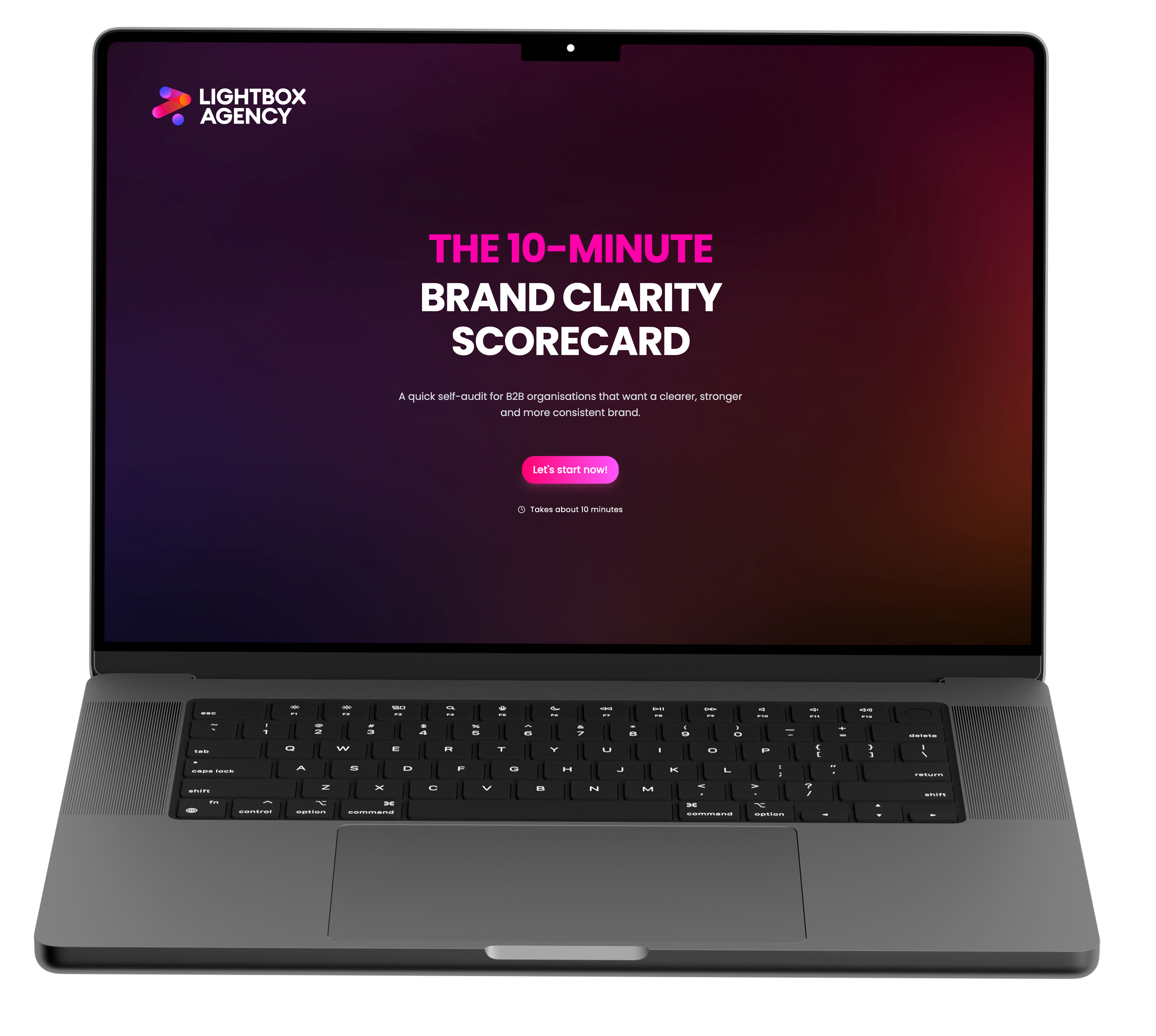

.png&w=3840&q=75)